
In December 2006, I wrote a post titled London: What’s the Stone For?. At the time, I was living in a London that felt like a giant, unsolved puzzle. That same winter, my search for direction took a much more literal, and much more amusing, turn during Eid prayers.
The Whimsical Detour of 2006
Looking back at that 2006 Eid, I can still feel the cold London air and the energy of the morning. I walked down the Maida Vale, following a stream of brothers in festive attire. I knew there was a mosque a few blocks away from my flat:
I went in and sat down and they were doing the normal chanting before prayer starts. Then everyone got up to start prayer and each person placed a small rectangular flat stone in front of him/her. There were a few in a bookshelf type thing so I took one and did the same, thinking oh well maybe this is to mark personal space or something. Then the prayer started and the imam (who was wearing a turban?) did the opening “Allahu akbar”. In our ‘normal’ Eid prayer, they do that like 5-7 of those in a row and between each, most people let their hands drop to the side. This time, they only did one and then started Al-Fatiha and everyone kept their hands down by their sides. d’oh!! Then the mass chanting starting. [Read the rest at Jollybengali.net]
The realization hit me: I was in a Shi’a mosque.
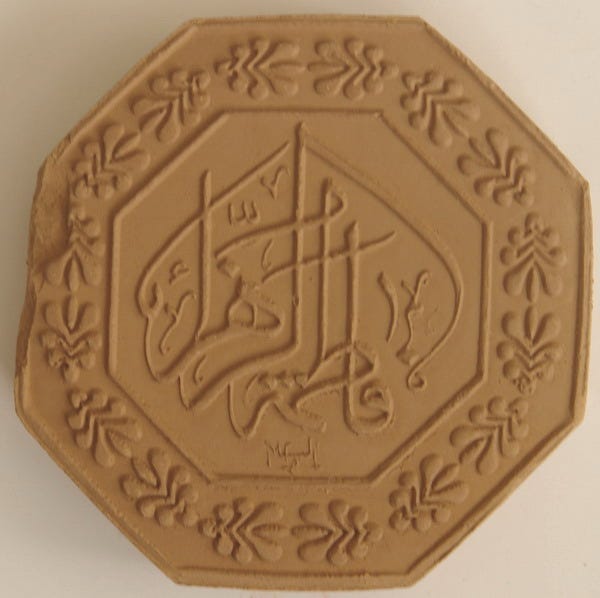
At the age of 26, my world was much smaller. I remember a flash of genuine confusion, followed by a wave of sheepish amusement and not a little fear. I was a Sunni guy who had accidentally “crashed” a Shi’a congregation. I spent half the prayer wondering if I had committed a major social faux pas and the other half trying to mimic the differences in the rhythm of the movements as quickly as they happened. There was something undeniably funny about the situation - me, the guy trying so hard to understand the “stones” and history of London, couldn’t even find the “right” mosque.
But as the prayer ended and the hall filled with “Eid Mubarak,” I realized nobody noticed or cared. The confusion dissolved into a sense of shared warmth. I had expected tension and a barrier, but I found a mirror.
The Passage of Time: 2006 vs. 2026
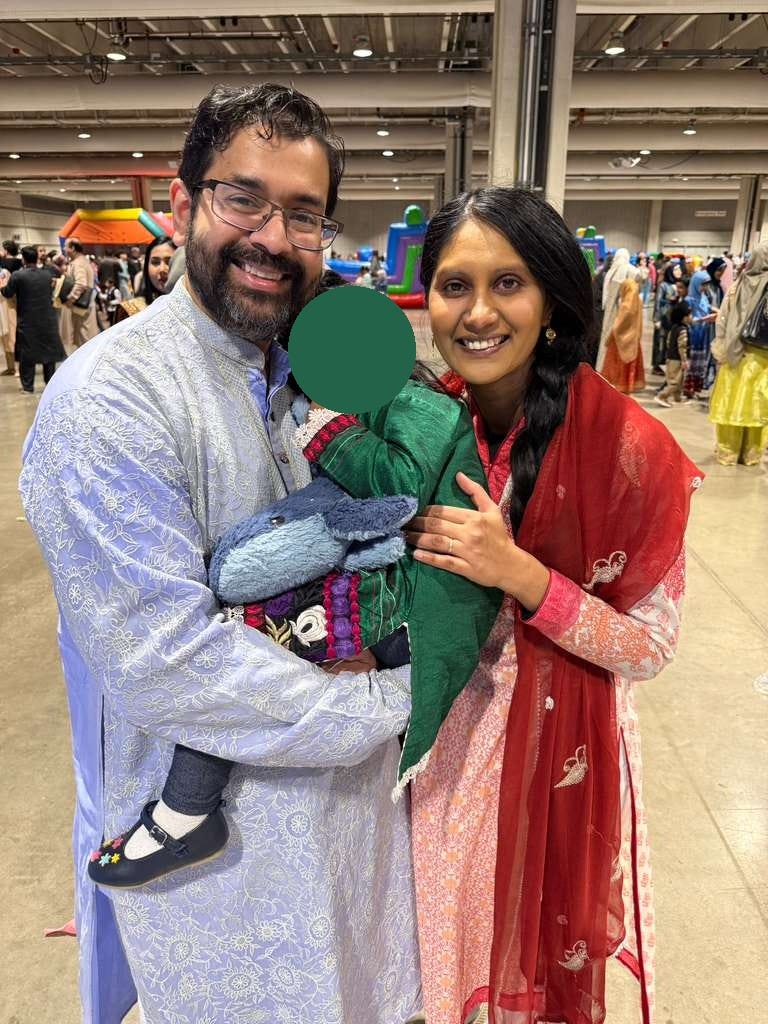
Twenty years of Ramadans have passed since that morning. This past Saturday, as I celebrated Eid ul-Fitr 2026, the backdrop was no longer the Thames, but the Three Rivers of Pittsburgh.
The distance between these two Eids is measured in more than just miles. In 2006, I was a traveler; today, I am a husband and a father to a two-year-old daughter.
The restless, analytical energy that once drove my travels has been channeled into building a home. These days, I have a fantastic group of friends - something that eluded me in London - even if I don’t see them as much as I would like because my wife and daughter rightfully take precedence.
I still feel that old itch to live overseas again. The wanderlust hasn’t died; it has simply evolved. Back in London, I couldn’t have made a permanent life because I was essentially alone. Now, I know that as long as my wife and daughter are with me, we could make a life anywhere.
A Hard-Won Peace with Faith
Perhaps the most significant change since 2006 is the evolution of my faith. Back then, I had a lot of quarrels with Islam. I was exhausted by the nitpickiness of many Muslims and the intransigence that seemed to creep into the Deen. I couldn’t stand the obsession with the “correct” Islam and the rigid rules attached to every article of faith.
To be honest, I still can’t stand the nitpickiness. But I have finally made my peace with it. I’ve realized I can safely ignore the noise and find a version of faith that feels true to me. Over the past few years, I have developed a consistent habit of praying four to five times a day. It isn’t always on time, and it might not satisfy the critics, but it is mine. It is a grounding practice that provides a steady compass rather than a rigid cage.
The amusement I felt in 2006 has matured into a deep sense of peace. I can see the different traditions within Islam as a source of richness. (And if they run counter to the rigidity of the Wahhabification of the Muslim Ummah, all the better!) That accidental morning in London was actually a precursor to the way I live now: with a faith that is expansive but private and grounded. I have learned that the “wrong” mosque doesn’t exist when you are there for the right reasons.
The View from Pittsburgh
Celebrating Eid in Pittsburgh in 2026 feels like a culmination. As I look at the skyline - a city that, like me, has reinvented itself from an industrial past to a tech-driven future - I feel a profound sense of alignment.
I think back to that 2006 version of me, standing in a London street, staring at a stone and wondering what it was for. I want to tell him that he doesn’t need to decode all the markers to belong. The meaning isn’t in the clay or the specific architecture of a mosque; it is in the intention (niyyah نِيَّةٌ) of the heart and the people you share the day with.
Twenty years ago, I was lost in a Shi’a mosque in London. Today, I am exactly where I need to be in Pittsburgh. The “confusion” of the past was just the beginning of the clarity I feel now.