
Warning: Spoilers for The Gathering Storm by Robert Jordan & Brandon Sanderson
There is a precise moment in The Gathering Storm where the universe threatens to collapse under the weight of its own repetition. On the jagged peak of Dragonmount, holding absolute, catastrophic power, Rand al’Thor looks down at a broken world and asks a question that every tired professional, every grieving soul, and every exhausted human has whispered to themselves in the dark: Why? Why must the Wheel turn? Why are we spun out into the Pattern over and over again, only to make the same tragic mistakes, endure the same betrayals, and lose everything we build to the inevitable erosion of time?
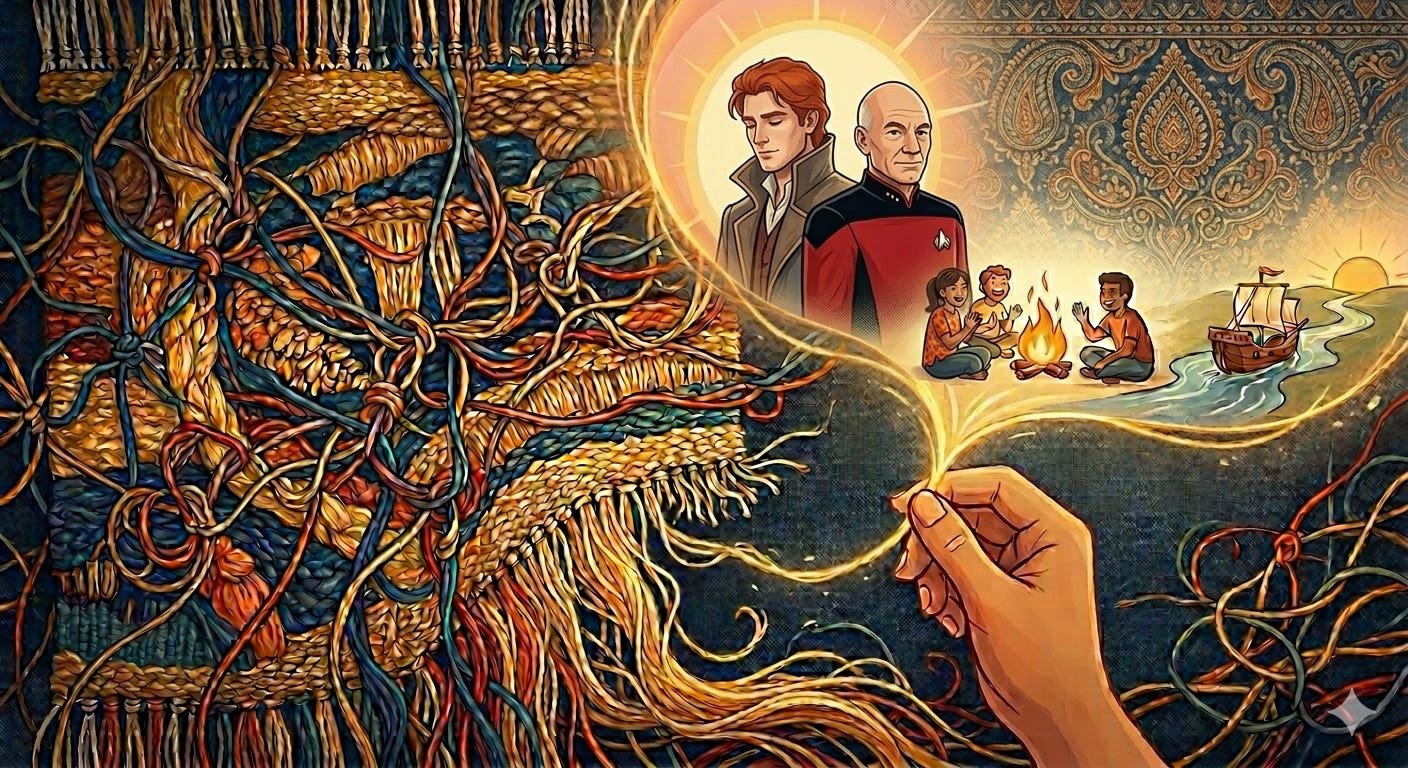
The Prison of Perfection
To a mind hardened into cold, unyielding stone, the endless cycle looks like a prison sentence. It looks like an agonizing joke. Rand stands ready to pull down the sky and shatter existence completely, offering the world a final, merciful oblivion.
But then, the voice of Lews Therin Telamon - the ghost of a past life who has spent months weeping and screaming in the dark recesses of Rand’s mind - speaks to him with absolute clarity. “Why? Could it be… Maybe it’s so that we can have a second chance.” This realization shocks Rand and he continues to ask why.
Eventually he comes to the conclusion, “Because each time we live, we get to love again.”
In that single epiphany, his entire perspective on the human experience shifts. The breakthrough on Dragonmount is not a victory of cold perfection or clinical strategy; it is a celebration of humanity’s messiness.
The Beauty in the Chaos
When the rigid, frozen shell around Rand’s heart finally shatters, he does not look back through his integrated memories and see a flawless lineage of legendary heroes. He sees thousands of lifetimes that were spectacularly, beautifully chaotic. He catches flashes of ordinary joys, laughter, shared jokes around campfires, and deep, imperfect friendships. He sees lives that were cluttered, tangled, and entirely lacking in symmetry, yet overflowing with love.
Many years ago, I wrote about the temptation to look back at our earlier chapters and judge the missteps too harshly. We often fall into the trap of wanting life to behave like an enterprise project that must be optimized, managed, and stripped of all variance. We want clean metrics, straight lines, and predictable outcomes. When our personal plans unravel, or when the daily routine feels like an endless loop of firefighting, we fall into a defensive nihilism. We demand to know why we bother building anything if it is just going to get messy again.
But looking at our past that way is a symptom of a mind hardened by the fear of failure. As I noted back then:
“What is youth if it is not wasted to some extent; to serve as fodder for experience. The path to equilibrium, to maturity comes not without making mistakes, lots and lots of mistakes.”
When we try to sanitize our history, we risk building a life that is safe but ultimately hollow. In that same piece, I looked at Captain Picard’s journey in the Star Trek: TNG episode Tapestry, where he is given a chance to undo his reckless youth, only to find that the absence of those mistakes left him a safe, mid-level officer with no leadership or drive.
Why the Messiness is the Point
The peak of Dragonmount answers us: The messiness is the point.
The Wheel of Time is not a prison; it is a mechanism of infinite second chances. Just as Rand had to realize that his thousands of chaotic past lives were exactly what gave the world its beauty & worth, we have to recognize that our own detours are never truly lost threads.
The lesson Picard learned is exactly what Rand realizes at the brink of destruction:
“There are many parts of my youth that I’m not proud of. There were loose threads; untidy parts of me that I would like to remove. But when I pulled on one of those threads; it unraveled the tapestry of my life.”
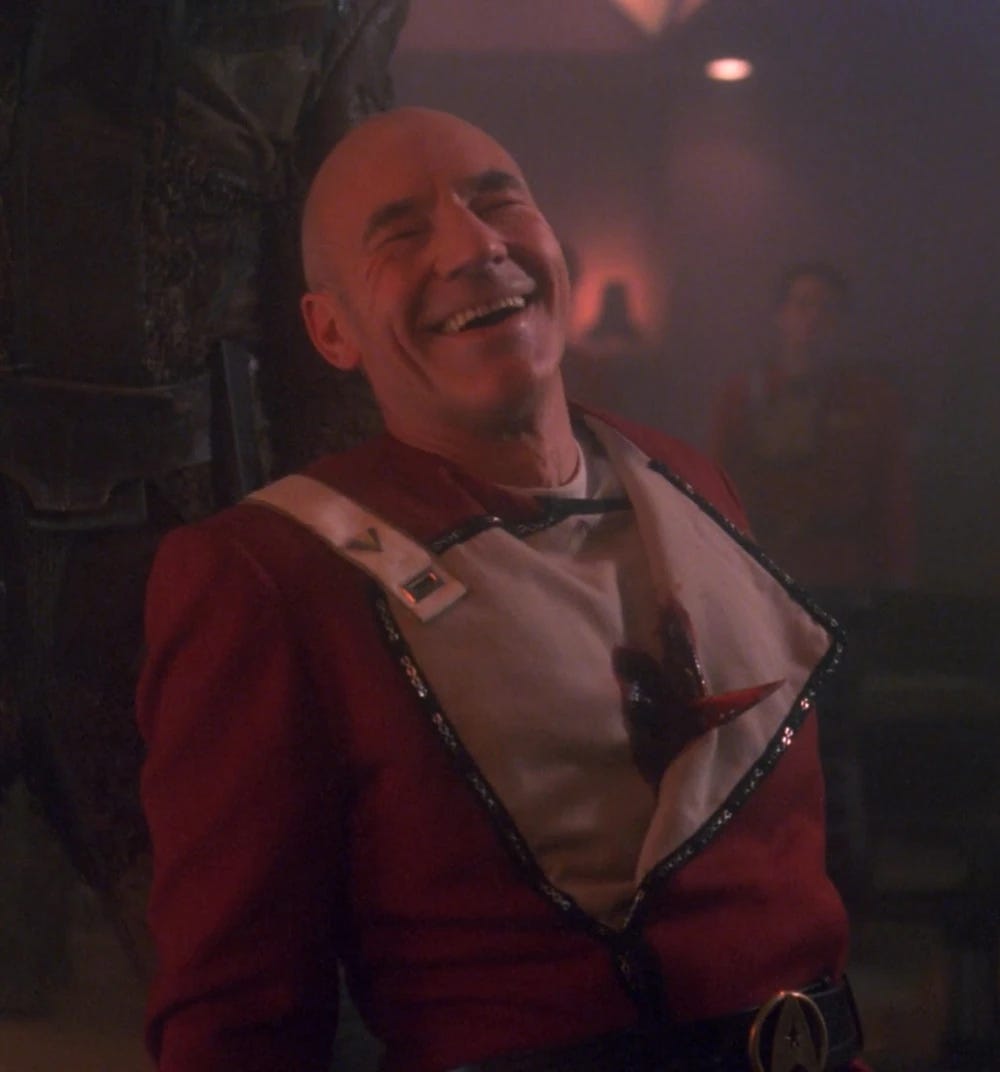
The struggle, the friction, and the volatile nature of our earlier days are not design flaws in our personal patterns - they are the exact canvas that allows maturity, perspective, and bravery to exist.
I remember the terrifying reality of leaping before looking - getting cold sweats on a flight to Abu Dhabi, thinking there was no way I was ready to lead a brand new team. It all worked out for the better. If we eliminate the risk, the recklessness, and the potential for a mess, we eliminate the very environment where growth happens. You cannot have the triumph of doing things better tomorrow without the stumbling block of doing them poorly today.
Embracing the Tangled Threads
When Rand finally weeps, he washes away the dangerous delusion that he needs to be hard to survive. He integrates his past, not as a burden of ancient trauma or a list of failed iterations, but as a vast, rich mosaic of lived experience. He releases the suffocating pressure of trying to control every thread and instead accepts the beautiful, turbulent flow of reality.
He channels that massive, blinding light into the sky, tearing open the dark clouds to let the sun break through. He laughs with genuine joy for the first time in years. He descends the mountain entirely changed - no longer a fragile weapon of stone and ice, but a whole savior who understands that his purpose is to protect the warmth, the humanity, and the glorious mess of the world he almost destroyed.
Let this be our reminder when the days feel heavy and the loop feels long. Don’t fear the clutter of a life fully lived, and don’t look back at your own history as a series of wasted turnings, lest we become old before our time. Embrace the ruts in the road, the unexpected detours, and the loose threads of your own story. We are here to learn, to stumble, to do it a little bit better next time, and above all, to have a chance to love again and again.