
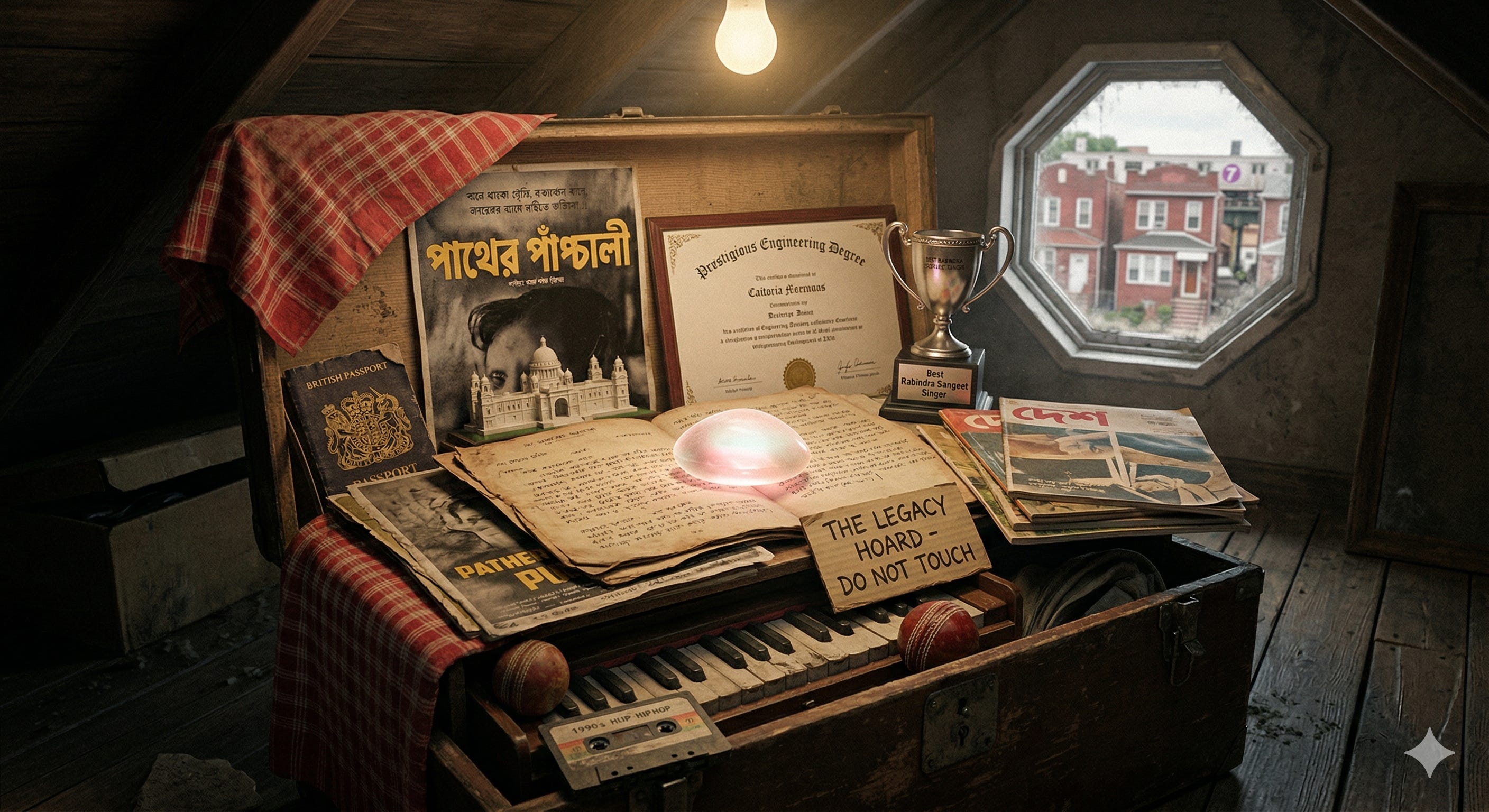
Towards the end of J.R.R Tolkien’s The Hobbit, Thorin Oakenshield lies dying and says to Bilbo Baggins, “If more of us valued food and cheer and song above hoarded gold, it would be a merrier world.” It is a wonderful epiphany although it arrives only after the damage has been fully done.
In her brilliant analysis, Thorin Oakenshield and the Perils of Restored Authority, Genny Harrison argues that Thorin was undone not simply by a case of greed. Instead, his was the failure of a leader who believed his “legitimacy” was self-evident - that because he was the rightful heir to the Kingdom under the Mountain, Erebor, he did not need to adapt to present-day circumstances after returning to power. He was a man trying to overwrite a living world with a hollow and long-since perished world. He had no plan for governing after Smaug perished and his kingdom was restored, ie. what happens after “Happily Ever After”.
I recently learned of the sociological concept of Distinction pioneered by Pierre Bourdieu through the TikTok account of Rickie Ho. By combining Ho’s and Harrison’s analyses, we can paint a rather disturbingly accurate portrait of the modern Desi diasporic experience. For immigrant or American-born Bengalis and Desis, the struggle lies betwixt the “hoarded gold” of an inherited cultural status and the “food and cheer” of a life well-lived.
The Mechanics of Distinction
According to Ho, Bourdieu’s conception of Distinction is often described as the way we use taste and “legit” culture to signal placement within social hierarchies. It’s not just about what we dig, man; it is about using those preferences to exclude others.
In traditional, formal Western environs, Distinction might look like knowing which fork to use or preferring opera over pop. In the Bengali & South Asian diasporas, it is weaponized through the idea of “Authenticity”. It is the “Arkenstone” of the community - a shiny marker of legitimacy used to end all arguments. If you speak the language perfectly, if you eat with your (right) hand using the right technique, if you possess the right degrees, if - if - if, then you are “distinguished”. If you don’t, you are a lost and pitiable ABCD (American-Born Confused Desi) or a Coconut (Brown on the outside, White on the inside).
Thorin (bhai) in the Diaspora
Harrison writes that “institutions built around grievance often preserve the story of what was taken more carefully than they prepare for the reality of return.”
This is the central struggle of the Bengali-American experience. Many of our first families to arrive in the West (and especially in the USA after the lifting of immigration restrictions) did so after rather traumatic, to put it lightly, events - Partition, war, economic displacement. Like the Dwarves of Erebor, our “Kingdoms” survive in songs, plays, genealogies, and the repetition of a history of loss. We carry an “inherited authority” in our minds, a version of The Culture® that stopped changing the year that our parents or grandparents boarded a plane. (This is also true of those who later willingly immigrated for economic opportunities, not simply out of displacement).
The danger in Thorin’s plans, as Harrison identifies, is when we try to “restore” that authority without first “coming home” to see how circumstances in the motherland have truly changed. We see this when parents insist on cultural standards or restrictions in behavior, dress, identity, or expression that no longer exist in Kolkata or Dhaka. We see it when the “Bengali-ness” of our peers is judged based on how well they mimic a past they have never lived and only intermittently, if ever, glimpsed. We become culture warriors defending a ‘hoard’ of cultural capital rather than shepherding a living, breathing, changing, dynamic community.
The comedian Vir Das also touched on this topic in one of his specials:
“Your parents version of India does not exist. It’s archaic. It’s gone. ... Come home. Come home and witness modern India in all our chaos but also our infinitely larger beauty, come home. And if you’re not going to come home, never lecture us from abroad about what it means to be Indian!” - YouTube Shorts
“Dragon Sickness”
Thorin’s true “Dragon Sickness” was an inflexible, defensive personality, not simply a love for gold. He refused to recognize the claims of the people of Laketown - folks who had built lives in his and his kins’ absence and who had a real and tangible need for money and resources after supporting his assault to retake the mountain. It should be noted that Hobbits such as Bilbo weren’t affected by Dragon Sickness because of how much they valued home and hearth.
In our own lives, this sickness manifests itself as a refusal to acknowledge the reality of our present environment. When we prioritize “distinction” - the need to be seen as the proper (or “bhodro”) kind of South Asian - we ignore the actual needs of the people around us. We ignore, to the peril of all, the mental health struggles of our people because they don’t fit this “distinguished” narrative. We ignore the creative paths that don’t promise “hoarded gold”. In short, we buy into the Model Minority Myth.
Harrison writes, “The system recognizes only possession and defiance. Adaptation is treated as surrender.” This is the tragedy of the rigid immigrant household, or the gatekept community. To adapt to the “new world” is seen as a betrayal of the “Mountain.” But as Thorin eventually discovered, holding the mountain means nothing if you have burned every bridge just to get there.
A Jolly Bengali in a Bhodro (Proper) World
This is why the concept of A Jolly Bengali is more than just a catchy name for a nom de plume; it is my attempt to subvert both Thorin’s “restored authority” and Bourdieu’s “Distinction”.
To be “Jolly”, in a parent culture that deifies propriety, is to choose “food and cheer and song” while we are still alive to enjoy such things. It is a declaration that my culture is not a hoard to be guarded, but a meal to be shared. Value, culturally, comes in how we adapt our inheritance to make the world better, or merrier.
Beyond the Mountain
Harrison concludes that Thorin’s arc endures because it shows how easily and willingly we are led to the same slaughter time and again. I see it with new immigrants who come to this country years after my family did and think that they can do things “better” than the poor sods, like us, who have gone “native” in Amrika. They will attempt to move forward, “dignified, convinced and certain”, only to lament the damage once it is done; just as my family has done. Only time and tide will begin to heal those wounds and then the cycle will repeat with another batch.
But we do have a choice. We can be like Thorin, slavishly devoted to a legacy that demands that we remain unchanged and exclusionary. Or we can heed his final words. We can realize that the gold - the status, the distinction, the authenticity - is naught but hollow and ash. It doesn’t rebuild lives. It doesn’t sustain us.
The throughline is clear - Authority without self-reflection is just a fancy name for blindness. Let’s value the song and food over the hoard.