
When FIFA announced it was expanding the World Cup to 48 teams, the instant, overwhelming reaction from traditionalist fuddy-duddy stuffed-shirts was a shudder of aesthetic offense. Humans have a collective hard-on for pristine design. We want everything optimized, and our narratives constructed with clean, predictable boundaries. An expanded World Cup isn’t a neat and tidy affair.
The structural complaints aren’t exactly wrong. Over 3 countries, 39 days and a staggering 104 matches, the suburban-sized sprawl of the new World Cup can feel less like prestige soccer and more like an over-engineered content play. We have already seen the unfortunate reality of it play out - a proud but rather overmatched Curaçao squad getting decimated by the barbarian hordes of Germania. It was lop-sided and occasionally painful to watch; exactly what critics lamented would happen when you open the floodgates.
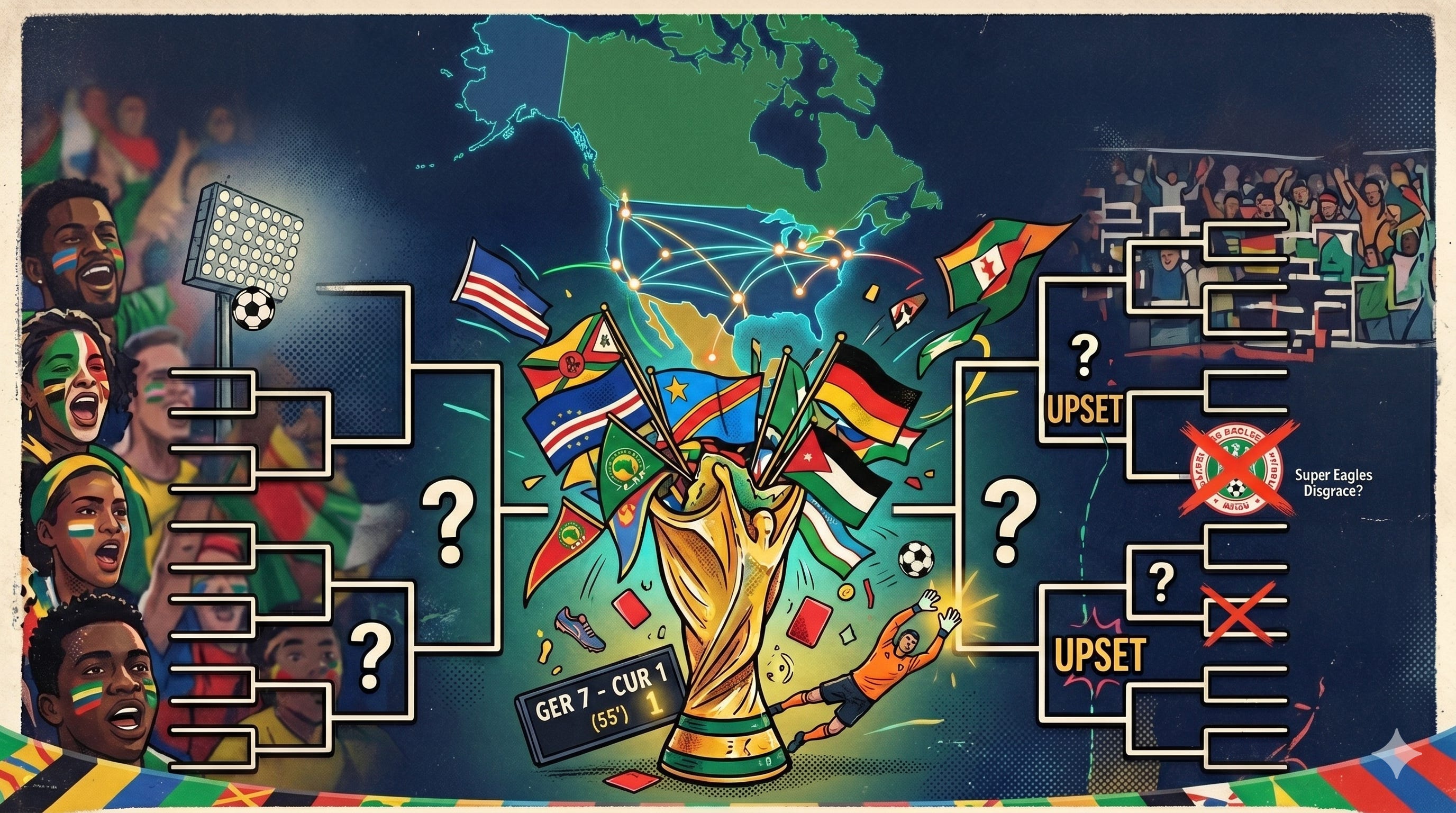
To focus entirely on the final whistle is to miss the realest point. Look instead at the moment when Curaçao’s Livano Comenencia scored to briefly, oh so briefly level the match at 1-1. The sheer, unadulterated shock and joy from that squad, its fans and anyone who loves the beautiful game and doesn’t care about Germany rendered the final scoreline almost irrelevant. For a debutant nation under Dick Advocaat, that singular moment will become a permanent anchor in their sporting history, and that of the entire futboling world. It was a chaotic, brilliant disruption of the script.
In much the same vein, another tiny island nation, Cabo Verde, held one of the odds-on favorites, Spain, to a nil-nil draw on Monday June 15th in their opener. Força Cabo Verde!
Engineered Volatility
By forcing open the gates, the tournament changes the psychological math of the knockout rounds. In the previous 32-team format, surviving the group stage was largely an exercise in established order. Most of the traditional powerhouses could sleepwalk through a bad game, rely on their depth, and safely make into the exclusive country-club atmosphere of the Round of 16.
In the new format, where the knockout rounds start at 32 teams, a heavy dose of (potential) volatility is introduced. The energy shifts closer to the March Madness of the NCAA Basketball Tournament.
An elite giant can still stumble through the group stage but they are then thrown into more do-or-die matches against hyper-motivated underdogs. In a single 90-minute single-elimination window, anything can happen - tactical rigidity can be shattered by a hot goalkeeper, a bad bounce, or an early red card. The safety net has been removed. We are trading the largely clinical certainty of the old format for a structure that practically (hopefully) guarantees a few, spectacular bracket-busting collapses.
A Rising Tide Lifts All Boats
Historically, smaller football federations could not improve without infrastructural investment and playing world-class opposition, but they had less opportunity for the former without qualification and less opportunity for the latter because regional qualifying slots were locked behind a razor-thin elite.
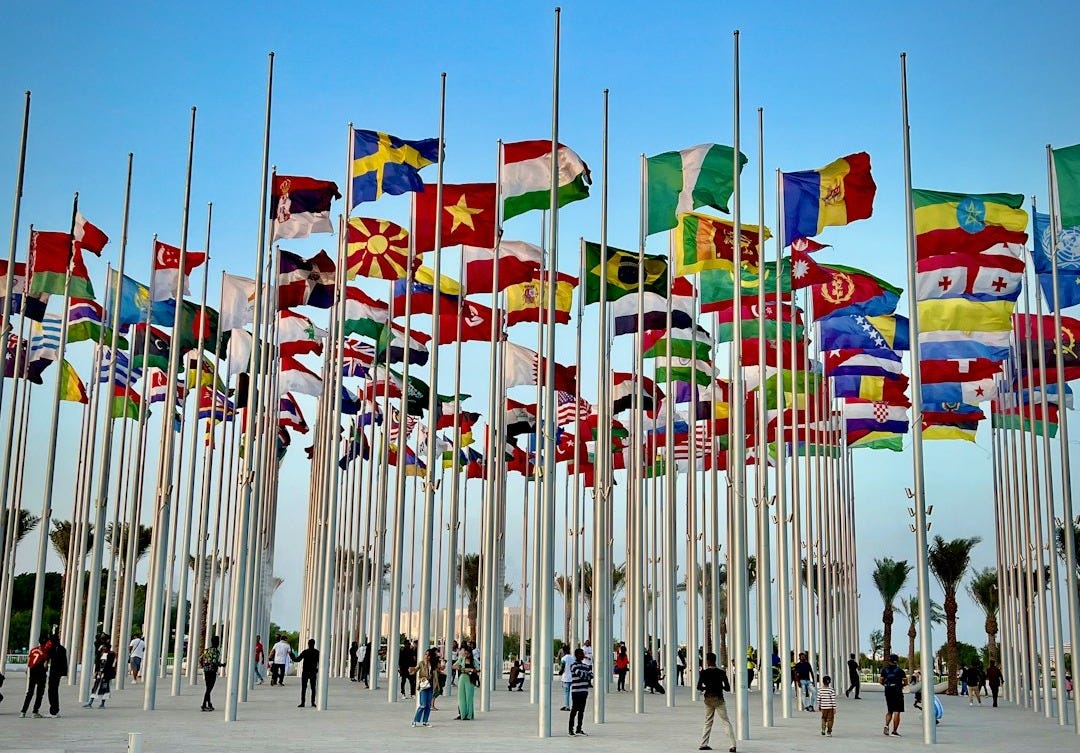
The new math offers a tantalizing systemic shift for African and Asian football. With 10 spots, Africa’s allocation offers powerhouse regulars a margin for error while introducing vibrant youngbloods like Cabo Verde and DR Congo. (Although it didn’t help my Super Eagles of Nigeria. What a disgrace!). Asia now claims 9 spots, pulling in debutants such as Uzbekistan and Jordan onto the grandest stage in world sport. Maybe someday China and India and Bangladesh might up their game enough to make it.
When a country qualifies for the World Cup, there is a domestic ripple effect. It triggers infrastructure funding, forces government investment, secures sponsorships, and shifts the imagination of a generation of kids who can logically (illogically) dream of making it to the World Cup. You cannot raise the baseline of a sport, or anything in life, by keeping it behind a velvet rope. It requires exposing these federations to the power and precision of elite competition. And it means weathering some ugly defeats in June to build a higher global ceiling years down the road.
Embracing the Sprawl
There is a broader truth here that goes beyond sports or tactics. We spend a lot of energy curating our lives. We try to build clean plans and try out best to edit out lopsided losses and minimize seemingly overwhelming outside chatter. We are afraid of sprawl. We dread the moment when we are outmatched, like Curaçao standing on the same pitch as the four-time champions Germany.
But the sharpest moments of growth, the broadest & deepest insights, and the stories we most vividly remember later always live out on the slippery slope. Despite our reservations to the contrary, life itself is often best-lived out on the slippery slope. Those moments occur when we dare to expand our horizons, cultivate and harness complexity, and risk embarrassment and public failure for a chance to play on the biggest stage.
Yes, FIFA is corrupt. It didn’t expand the tournament out of nobility or even love for the game. But people have always found worth and meaning despite the best (or worst) intentions of the moneyed classes and their mercantile interests.
The expanded World Cup is vast, loud, and quite unpolished. It is a reflection of a modernity that strives to embrace the grand complexity and diversity of this world. There is so much joy to be found in simply pulling up a chair and watching the beautiful mess unfold.